9 Lessons From My First Longevity Summit
What Zürich changed about how I think about ageing, healthspan and longevity medicine. Nine reflections from the GCLS Semester Symposium on biological reserve, resilience and evidence.
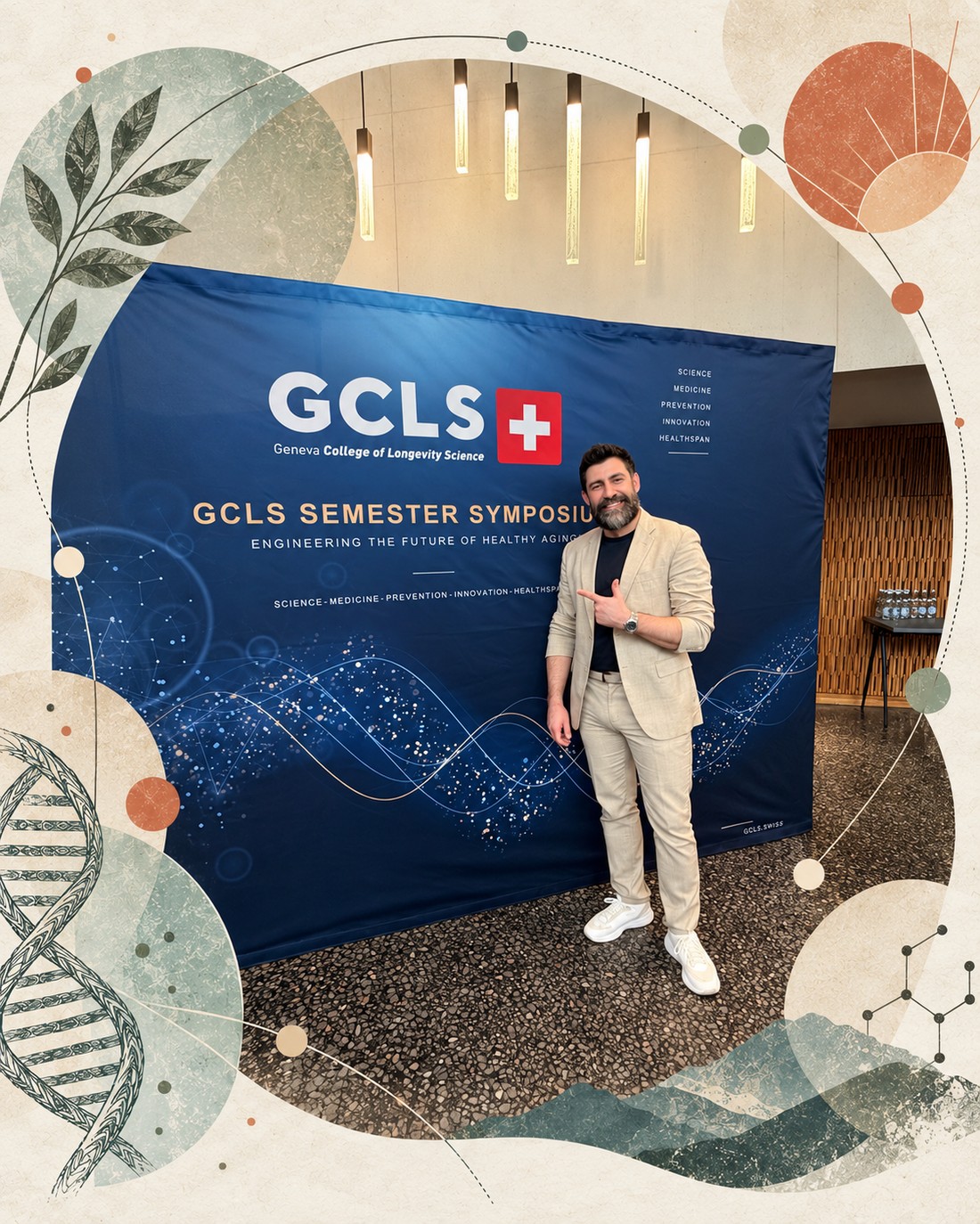
What Zurich changed about how I think about ageing, healthspan and longevity medicine
I went to my first longevity summit expecting to hear a lot about how to live longer. I came away thinking much more about something slightly different: biological reserve.
How much reserve do we build? What makes us lose it? How do we know when the rate of decline changes? How well do we recover when the body is challenged? And how much of what is currently sold as longevity medicine is supported by meaningful human evidence?
The GCLS Semester Symposium in Zurich moved from biogerontology and epigenetics through psychosocial health, menopause, diet, oral health, prehabilitation, emerging therapeutics and even the investment case for longevity. The talks were very different, but together they formed a coherent idea: longevity is less about defeating ageing than managing biological reserve across the life course.
Healthspan is not simply the absence of disease. It is function, reserve, resilience and the capacity to recover.
1. Longevity starts earlier than we think
One of the strongest themes was that ageing cannot sensibly be treated as something that begins at 50 or 60. Prof. Bernd Kleine-Gunk's discussion of epigenetics pushed the story backwards into pregnancy and early development, while Prof. Suresh Rattan's biogerontology framing reminded us that the systems responsible for maintenance and repair operate throughout life.
Pregnancy is one of the important windows in which environmental and nutritional exposures may shape later biology. The broader point is not that our future is fixed before birth. It is that ageing biology has a history. What happens early can influence the reserve with which we enter adulthood, and later life still offers opportunities for catch-up, adaptation and risk reduction.
That changes the usual longevity question. Instead of asking only what a 50-year-old should take or measure, we should also ask how biological reserve is built and protected from the beginning.
2. Your trajectory may matter more than your age
Douglas Anderson's 'Depreciating Assets' slide was one of the clearest visual ideas of the meeting. Health rises through development, peaks, and then follows different trajectories. Some people achieve a higher peak reserve and lose it slowly. Others start lower, or begin to decline earlier. Importantly, the model also included catch-up.
Two people can therefore share the same chronological age and have very different amounts of functional reserve. A single biological-age number may be interesting, but the more useful clinical question is often directional: where are you now, which way are you travelling, and how quickly?
This is why longitudinal measurement matters. Fitness, muscle, body composition, metabolic markers, cognition and function become more useful when we examine the slope rather than one isolated result.
3. Behaviour still does most of the heavy lifting
For all the excitement around epigenetic clocks, peptides, NAD+, rapalogs and regenerative medicine, many of the most defensible longevity interventions remain familiar: movement, nutrition, sleep, avoidance of smoking, sensible alcohol use and management of chronic stress.
Prof. Sunil Kumar's prehabilitation work made these behaviours concrete. Low fitness, poor nutrition, smoking, alcohol, sleep and stress all alter how patients tolerate a major physiological insult. Prof. Suresh Rattan added the concept of hormesis: selected challenges such as exercise can activate adaptive maintenance and repair pathways rather than simply representing damage to avoid.
The dietary discussion also cut through some tribalism. Vegetarian and Nordic patterns showed favourable signals, while the Mediterranean diet still has stronger long-term clinical outcome evidence. The message was not that one label wins. It was that food quality, plant diversity, favourable fats and overall metabolic context matter more than allegiance to a diet identity.
4. The social environment is biology
Prof. Sabina Misoch's session was a useful reminder that social isolation, relationship quality, purpose and personality are not soft extras sitting outside biology. They can influence stress signalling, immune regulation, inflammation and behaviour, and are repeatedly associated with mortality and health outcomes.
One of the memorable slides showed increased mortality risk associated with social isolation, loneliness and living alone. Another highlighted the relationship between marital quality and physical health. The playful content version is 'choose your partner carefully', but the serious message is that relationship quality can either buffer stress or amplify it.
Purpose mattered too. The Japanese concept of ikigai was presented as a reason to get up in the morning. It does not have to be grand. Family, work, friendship, learning, creativity or a hobby can all provide structure and meaning. Even personality enters the conversation, with conscientiousness and openness appearing in longevity research.
5. Menopause is a longevity transition, not simply a symptom cluster
Dr Jennifer Pearlman's FemSpan session reframed menopause as a major biological transition. Oestrogen depletion interacts with bone, cardiovascular risk, glucose regulation, visceral fat, brain function, sleep, mood, mitochondrial biology, skin and hair.
The point that stayed with me was the association between later natural menopause and longer survival. In large observational cohorts, later menopause and longer reproductive lifespan have been associated with greater odds of exceptional longevity. That does not prove that delaying menopause itself causes longer life. Menopause timing may also be a marker of underlying biology, genetics and general health.
The clinical implication is still important: female longevity cannot simply be a male longevity framework with a menopause chapter added. Women have a distinct trajectory that deserves measurement and prevention strategies of its own.
6. Oral health belongs inside longevity medicine
Dr Sahar Haroon's talk made a simple but important point: the mouth is not biologically separate from the rest of the body. A healthy oral ecosystem can move towards dysbiosis, periodontal disease and chronic local inflammation. That inflammatory burden can then sit alongside wider metabolic and vascular risk.
The evidence is strongest for the bidirectional relationship between periodontal disease and diabetes. Cardiovascular associations are substantial, while the links with cognition and Alzheimer's disease remain an area of emerging evidence.
The phrase on the slide that should remain central is 'association does not equal causation'. Oral health deserves a place in longevity medicine precisely because the evidence can be discussed without exaggerating it.
7. Resilience may be more useful than a static biological-age score
Prof. Sunil Kumar described surgery as a controlled physiological insult with a known date. In his words, surgery can compress a decade of frailty into a fortnight. The perioperative window therefore becomes a natural experiment in biological reserve.
Two people of the same age can undergo a similar operation and recover very differently. That difference reflects fitness, nutrition, metabolic health, sleep, stress, smoking, alcohol and underlying frailty. Many of those factors are modifiable before surgery.
The broader longevity question is fascinating: instead of asking only how old a biomarker says we are, perhaps we should ask how well the system responds to a challenge and how effectively it returns towards baseline. Recovery capacity may be one of the clearest expressions of healthspan.
8. The science is exciting, but evidence has to come before hype
Prof. Luiza Spiru's presentation was one of the sharpest critiques of the longevity ecosystem itself. A mouse study becomes a press release. The press release becomes a headline. The headline becomes a social-media claim. The claim becomes a commercial test, supplement or treatment. At each step, uncertainty can disappear.
The same caution applies to peptides, NAD+, stem cells, exosomes, rapalogs and other emerging interventions. Mechanistic plausibility is not the same as a meaningful human outcome. Animal evidence is not human evidence. A biomarker change is not automatically a healthspan gain.
If longevity medicine wants to become a serious medical discipline, its advantage should be intellectual discipline: knowing what is proven, what is promising, what is experimental and when the right recommendation is to do less.
9. Longevity is now an industry
Damien Ng's session from Julius Baer changed the context of everything else. Population ageing, chronic disease, biotechnology, private medicine, diagnostics, insurance, financial planning and consumer health are converging into a large economic sector.
My slightly tongue-in-cheek takeaway was: when Swiss banks are involved, you know longevity has become an industry.
That is not necessarily a bad thing. Capital can accelerate science, diagnostics and healthcare innovation. But the incentives change once longevity becomes an investable theme. The bigger the market becomes, the more important evidence, ethics and clinical restraint become. We need to stay alert to the difference between what can be sold and what has actually been shown to improve healthspan.
The question I came home with
How can we talk about health without talking about disease?
Longevity culture sometimes tries to distance itself from conventional medicine by focusing only on optimisation. Biologically, that separation eventually collapses. Loss of metabolic flexibility becomes diabetes. Loss of vascular health becomes cardiovascular disease. Loss of bone reserve becomes osteoporosis. Neurodegeneration becomes cognitive impairment.
Disease is often what declining reserve eventually looks like at organ level. But the reverse is also true: health should not be defined merely as 'no diagnosis yet'. A more useful definition is function, reserve, resilience and recovery capacity.
Build reserve. Protect it. Test resilience. Measure the trajectory. Intervene when the evidence justifies it.
That might be a more useful definition of longevity medicine than simply trying to add years to life.
Reflections from the GCLS Semester Symposium, Zurich, 3 October 2026.
Thank you to NADclinic- Producers of the worlds premium NAD+ and Sarah Hickey for this fantastic opportunity. I attended the GCLS symposium in my capacity as a KOL with the group.
Read and join the conversation on LinkedIn