From volume to collagen to communication
My reflections from Agorà 2026 on extracellular matrix biology, biomimetic signalling and the questions shaping my approach to aesthetic medicine.
For many years, we talked about replacing volume. Then the conversation broadened towards collagen stimulation and skin quality.
At Agorà 2026 in Milan, I wanted to take that conversation one step further: what if the next advance depends on the information we give tissue?
That was the thread running through my presentation on MEC Regenerate, biomimetic signalling and the extracellular matrix. To understand why this interests me, we need to think about what the matrix actually does.
The extracellular matrix is a place of communication
The extracellular matrix, or ECM, is the network surrounding our cells. We often describe it as scaffolding, with collagen providing much of its structural support. Cells also experience it as a biochemical and mechanical environment.
Fibroblasts, which help produce and maintain the matrix, respond to their attachments and the physical forces around them. Matrix proteins can bind growth factors and influence how these signals are presented to cells. Structure and communication are closely connected.
Ageing changes that relationship. As collagen becomes fragmented and the matrix loses organisation, fibroblast attachment, shape and function can change too. The environment in which tissue renewal takes place becomes part of the problem.
That changes the question I ask as a clinician. How much collagen we stimulate matters. So does its organisation, and the quality of communication between the matrix and the cells that maintain it.
From Nietzsche to nurturing
Nietzsche gave us a line that could almost serve as the unofficial motto of a familiar approach to aesthetic medicine:
“That which does not kill me, makes me stronger.”
We create a controlled injury and rely on the tissue’s repair response to produce a useful change. Fractional resurfacing, for example, deliberately initiates injury and remodelling. That remains a valuable therapeutic principle.
But must the route to renewal always begin with damage?
There is another way to think about development: scaffolding, a concept used in education and parenting. We offer clear guidance, break a task into manageable steps and provide enough support for someone to achieve what they cannot yet do alone. As their ability develops, the support can gradually be reduced.
The person still does the work. We help create the conditions that make progress possible.
That is a useful analogy for the question I raised at Agorà: can we give tissue meaningful biological cues, alongside the ingredients and structural support needed to respond?
Or, to put it more bluntly: what if, instead of slapping the tissues in the face, we kindly told them what to do?
And then gave them the tools to do it.
The word scaffolding has a particular resonance here. We already use it to describe the ECM’s structural role. Adding communication to that picture invites us to think about how a treatment might guide and support cellular activity.
Inflammation and signalling are interconnected, so the distinction is one of therapeutic emphasis. What interests me is moving towards a more instructive approach to regeneration: choosing biological cues and supporting the conditions in which tissue responds.
How MEC Regenerate brings the idea together
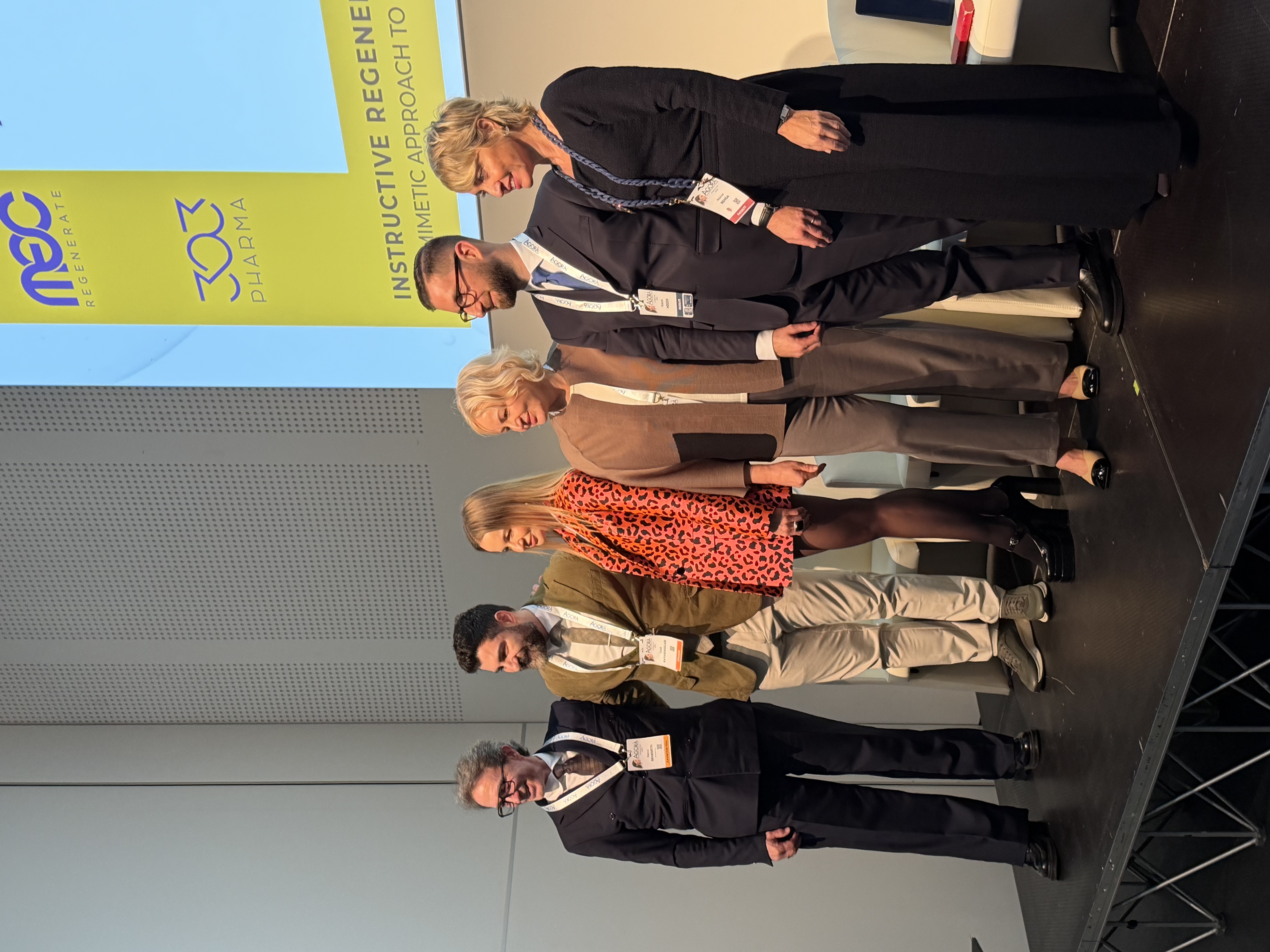
MEC Regenerate was the practical example at the centre of our workshop. Developed by 303 Pharma, it combines a recombinant collagen fragment, polycaprolactone, an amino-acid complex and a carboxymethylcellulose carrier. Its design brings together four proposed functions.
The signal. The recombinant fragment is based on the human alpha-1 chain of type I collagen and is produced using a transgenic silkworm platform. It is intended to provide a biomimetic cue drawn from the biology of the matrix.
The support. My first reaction when I read about MEC was: it contains PCL, we already know what PCL does. But the role proposed for the PCL component here is to support the presentation and persistence of the cue. Understanding that role requires us to consider the particular formulation and how its components work together. This was a central distinction in my presentation narrative.
The ingredients. Instructions alone do not build tissue. The amino-acid complex reflects the idea that matrix renewal also requires substrates, alongside the signals that help direct cellular activity.
The carrier. Carboxymethylcellulose provides the carrier environment. This brings distribution, localisation and placement into the discussion. How tissue encounters the components is part of the treatment design, which is why the ultrasound perspective brought to the workshop by Dr Barbara Parda-Głomska was so relevant.
Signal, support, substrate and carrier: this is a coordinated design rationale. Its value needs to be evaluated in the finished formulation and in patients. The tissue still has to do the biological work. The aim is to give it useful instructions and the conditions needed to respond.
Connecting the concept with our clinical evaluation
That is why being involved in the clinical evaluation matters to me. I have participated as a co-investigator alongside colleagues led by Professor Wioletta Barańska-Rybak.
The findings presented at Agorà included a follow-up group of 53 patients assessed six months after their second treatment. The two treatments were given approximately 60 days apart. Assessment included standardised photography, clinical observations and patients’ own perceptions of change.
The follow-up presentation reported improvements in assessed or perceived skin texture, firmness and jawline definition. No serious adverse events were reported during the follow-up described. Reactions such as swelling and redness were characterised as mild and transient.
For me, this is where the concept begins to meet clinical practice: documenting what patients experience, how long changes persist and what the safety follow-up tells us.
The question I am taking back to practice
Regeneration is not an event. It is a process.
As clinicians, we need to consider the information tissue receives, the environment in which it receives it and the resources available to respond.
Injury-based treatments remain important, particularly where damaged tissue needs resurfacing or remodelling. Biomimetic approaches give us another way to think about treatment design. The choice needs to follow the biological problem we are trying to solve for the patient and the evidence supporting the approach.
What excites me after Milan is the possibility of making biological communication a more deliberate part of aesthetic medicine.
We have learned to think about volume. We have learned to think about collagen. I believe the next step is to think much more carefully about the information that helps tissue renew itself.
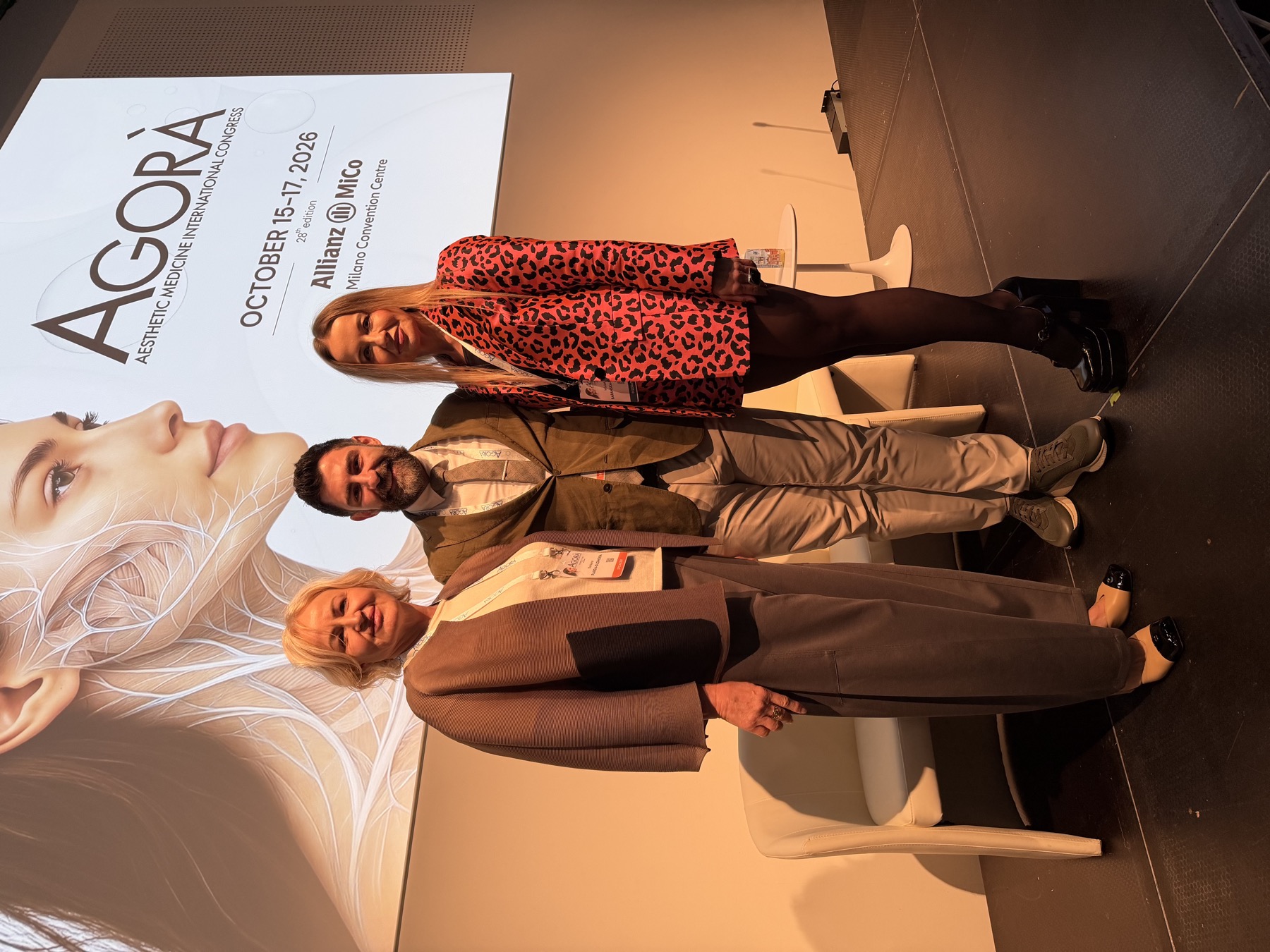
Thank you to Professor Wioletta Barańska-Rybak, Dr Barbara Parda-Głomska, Dr Monica Renga and Dr Roberto Mocchi for the complementary perspectives brought to this workshop, and to Marco Benedetti, Filip Skrzypiec and the teams at 303 Pharma and Beauty Europe for bringing it together.
Disclosure: I work with Beauty Europe as a masterclass trainer and participated in the MEC Regenerate clinical evaluation.
Explore more